
Spiral Stabilization (SPS)
Spiral Stabilization rebuilding spinal support from the inside out
A scientifically grounded exercise method for scoliosis, disc herniation, chronic back pain and postural problems. It activates the body’s own spiral muscle chains to lengthen the spine, stabilise the core and relearn pain-free movement.
About SPS
 01 — Spinal health
 02 — Rehabilitation
 03 — Emotional wellbeing
 04 — Cognitive health
Not a passive treatment — a retraining of how your body holds itself
Activate · Lengthen · Rebuild
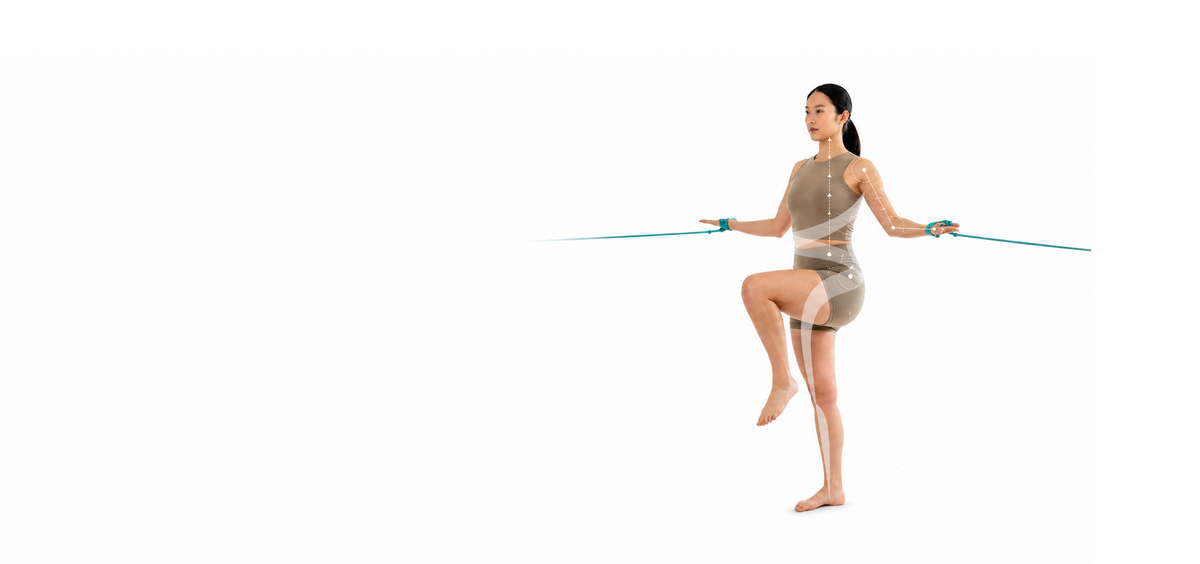
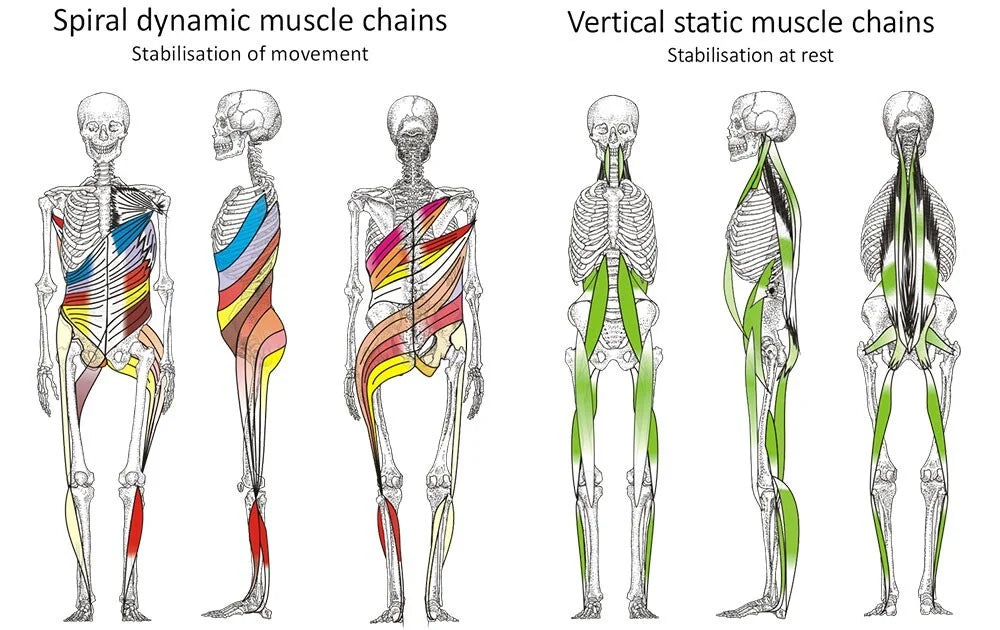
SPS uses targeted exercises with an elastic rope and training poles to activate the body’s natural spiral muscle chains, forming a dynamic internal support system around the trunk. The resulting upward traction lengthens the spine and creates space between the vertebrae, giving compressed discs room to regenerate, while retraining the brain and nervous system toward correct, pain-free movement patterns. All courses are offered for educational and general wellness purposes.
Optimised spinal function
Better postural alignment, with load distributed more evenly across the major joints.
Recovery and prevention
Conservative rehabilitation and prevention for conditions such as scoliosis and disc herniation.
Release and clarity
Releasing stored physical tension and energy, easing the sensation of brain fog.

Neural reconnection
Reconnecting brain and nervous system through coordination training.
The scienceHow does SPS work?
How the spiral muscle chains decompress the spine
SPS was developed by Czech rehabilitation specialist Dr Richard Smíšek over decades of clinical work beginning in 1979, and is now used in clinics and hospitals worldwide.
The exercises train specific spiral chains — the latissimus dorsi and gluteus maximus among them — to form dynamic, stabilising support around the trunk. The spiral movement pattern stretches and strengthens muscle at the same time, improves coordination, and prompts adaptation between agonist and antagonist muscles, correcting imbalances and returning the spine to better alignment.
Still have questions? Start with the FAQ below.
40+ years
Continuously developed and clinically tested by Dr Richard Smíšek since 1979.
20+ years
In use in Germany for over two decades, and covered by some health insurance schemes.
RCT
Effectiveness examined in randomised controlled trials and peer-reviewed research.
Real change
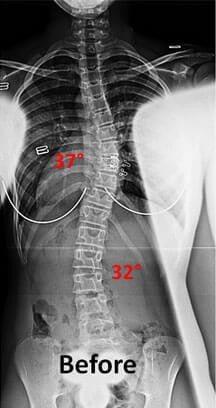
Before and after SPS training
Spinal imaging from the same participant before and after SPS training. Individual results vary and depend on how consistently the exercises are practised.
Before
Lateral deviation of the spine, narrowed disc spaces and uneven muscle tension between the two sides.
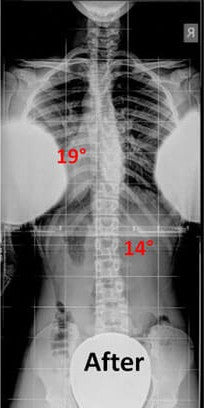
After
Improved alignment, increased space between vertebrae, and support redistributed through the muscle chains.
The evidence
As effective as the internationally recognised Schroth method — and a step further on dynamic postural control
A 2025 study in PLOS ONE was the first to compare SPS, Schroth and general core stabilisation under the same clinical conditions. Sixty-one patients aged 6–18 with idiopathic scoliosis (Cobb angle ≤40°) were divided into three groups, each training twice a week for 30 minutes across a 10-session course, with follow-up at six months.
| Measure | Schroth method | SPS Spiral Stabilization | General core stabilisation |
|---|---|---|---|
| Cobb angle (curve magnitude) |
20.32° → 11.00°Significant improvement | 20.52° → 11.71°Significant improvement | 24.44° → 17.72°Smaller improvement |
| Trunk rotation (ATR) |
7.55° → 4.14°Significant improvement | 8.57° → 5.00°Significant improvement | 11.28° → 8.00°Smaller improvement |
| Clavicle angle (shoulder level) |
2.04° → 1.43°Not significant | 2.41° → 0.50°Largest gain of the three | 2.72° → 1.83°Not significant |
| Trunk aesthetics (TRACE) |
4.50 → 2.73Significant improvement | 4.67 → 1.95Significant improvement | 7.22 → 4.89Smaller improvement |
| Quality of life function score (SRS-22) |
No significant change | Significant improvementOnly group to improve | No significant change |
Finding 1Cobb p = 0.785 · ATR p = 0.409 · TRACE p = 0.238
Curve correction: on par with Schroth
Across curve magnitude, trunk rotation and trunk aesthetics, no statistically significant difference was found between SPS and Schroth. The two performed comparably.
Finding 2Clavicle angle 2.41° → 0.50° (within-group p < 0.05)
Dynamic control: where SPS stands apart
The study notes that Schroth is static in nature, with limited carry-over into everyday function. SPS emphasises dynamic postural adjustment and scapular balance, producing the largest gain in clavicle angle and the only significant improvement in the function score.
Finding 3Cobb p = 0.033 · Pelvic obliquity p < 0.001
Clearly ahead of general core training
General core stabilisation builds strength but lacks a corrective focus on neutral spinal alignment. SPS outperformed it significantly on both curve magnitude and pelvic obliquity.
Source
Lu H et al., PLOS ONE, October 2025. doi.org/10.1371/journal.pone.0334713
Short-term retrospective study (n=61, six-month follow-up). Individual results vary.
Your instructor
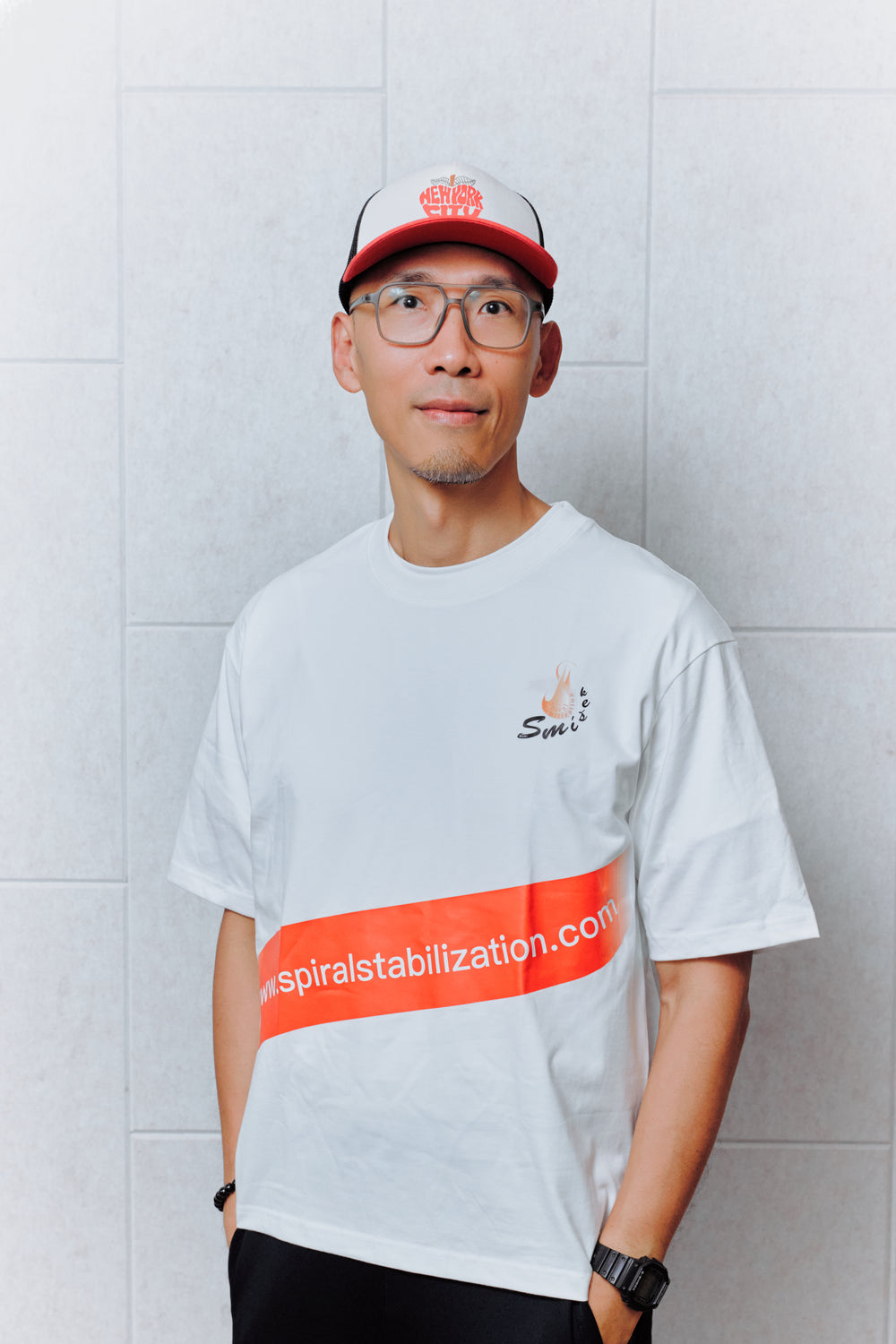
Hong Kong’s first official SPS certification trainer
Areas of focus
Edvin Chu 徐仲良
Official SPS Certification Trainer·Movement Mastery & Corrective Exercise Specialist
Every SPS course at AWRTC is taught in person by Edvin Chu — a Certified Teacher of Spiral Stabilization Course 1 under SPS headquarters in the Czech Republic, who has completed SPS Courses 1, 2, 3, 4, 6 and 7. Alongside the method itself he brings a background in corrective exercise, neuromuscular rehabilitation and running mechanics, so each principle is taught with the reasoning behind it.
- Running form, posture and scoliosis correction
- High-performance stability and injury-prevention movement coaching
- Core Visionary of AlignTrix · All-Ages Movement Mastery Instructor
Spiral Stabilization
- Certified Teacher of Spiral Stabilization Course 1, issued by SPS headquarters in the Czech Republic
- Completed SPS Courses 1, 2, 3, 4, 6 and 7
- Teaches every AWRTC SPS course in person
Corrective & rehab
- NASM Corrective Exercise Specialist
- Dynamic Neuromuscular Stabilization (DNS), Course A
- NeuroKinetic Therapy, Level 3
- HKSEA Stretching Instructor
Movement & mobility
- Stick Mobility Certified Specialist, Level 2
- TheraBand® CLX Trainer
- EBFA Barefoot Training Specialist, Level 1
Running & performance
- Pose Method Certified Running Technique Specialist, Level 2
- ALTIS Short Sprints Coach
- AASFP Distance Running Instructor & Personal Fitness Trainer
Courses
Your path to spinal health starts here
AWRTC offers three levels of training, shaped around your goal — whether you want relief from your own pain or a professional qualification.
01ExperienceAbout the workshop
Discovery Workshop
A 90-minute group workshop where you feel the immediate effect of SPS and receive a personal posture analysis.
02ApplyAbout Basic Training
Basic Training
A modular foundation course for learners who want to use SPS precisely as an everyday tool.
03CertifyAbout the certificate
International Certificate — Level 1
A four-day course for those seeking deeper personal change, or wanting to bring SPS into professional practice.
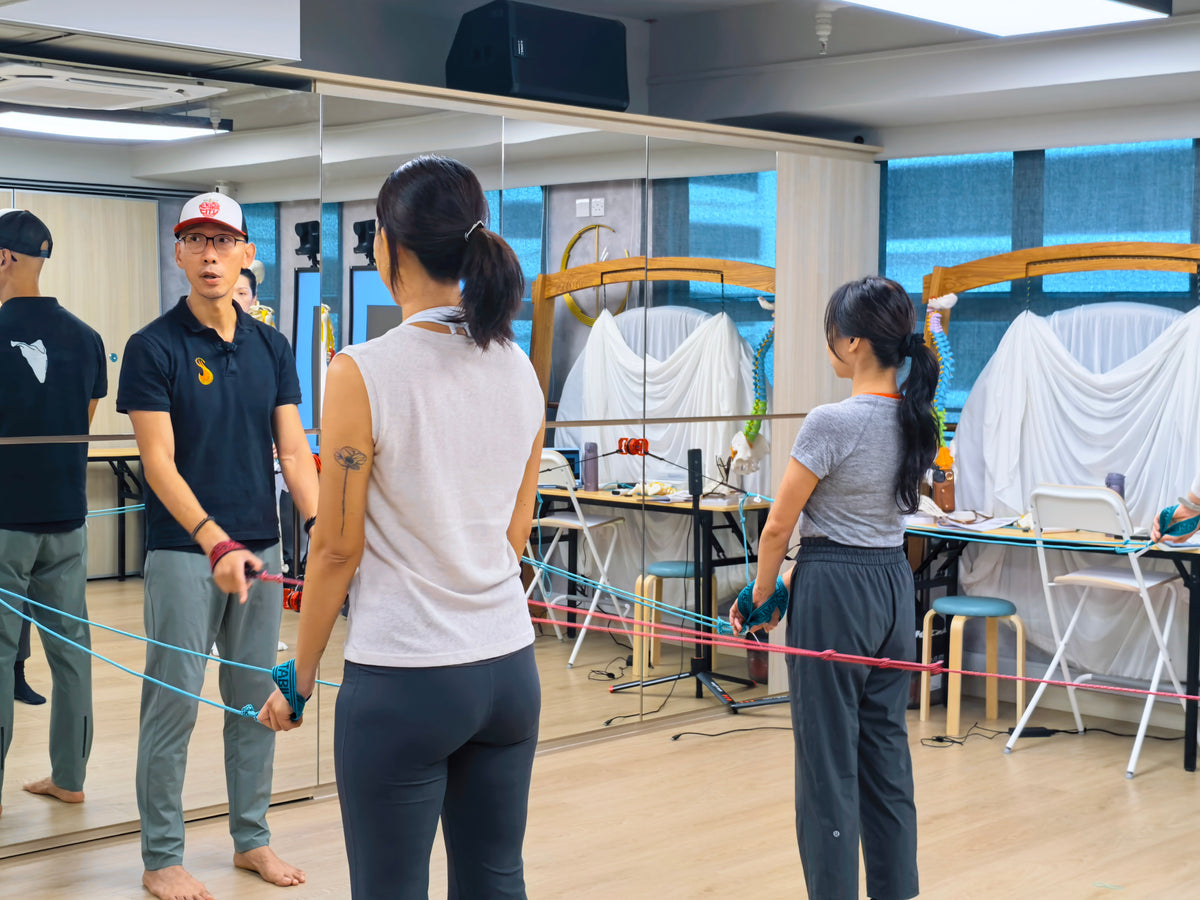
01 — Discovery WorkshopWhat you will learn
Ninety minutes to feel it for yourself
In the SPS Discovery Workshop you experience what it feels like when the spiral chains switch on, and leave with a posture analysis of your own.
-
✓
The founding principles of SPS
-
✓
A personal posture analysis
-
✓
The breathing principles central to the technique
-
✓
The foundational SPS exercises
-
✓
Activation of the spiral muscle chains
Course details
Enrol now90 minutes · No prerequisites
Open to all ages, including children aged five and above and expectant mothers
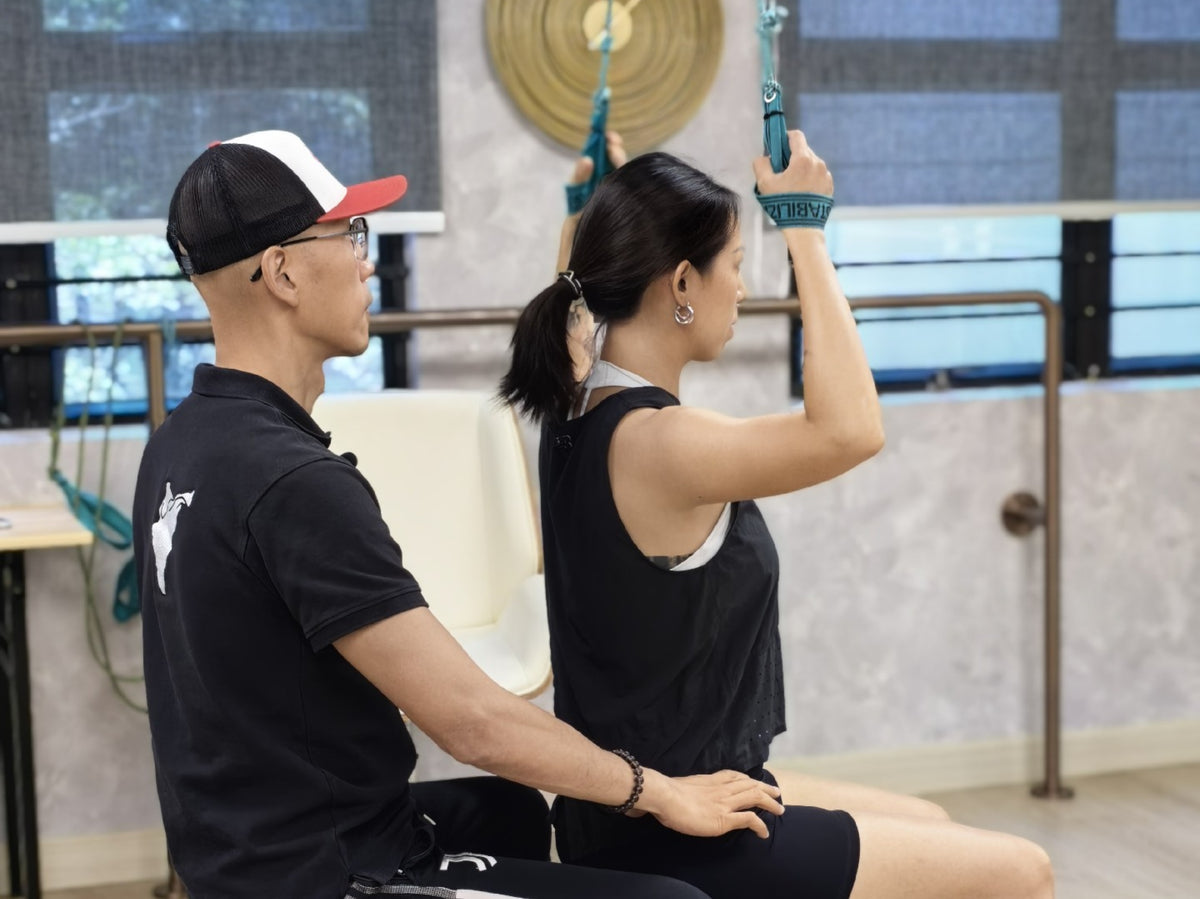
02 — Basic TrainingWho it is for
Two modules: upper body and lower body
SPS Basic Training is a modular course centred on the core principles of spiral stabilisation, suited to both general postural improvement and targeted pain management. The upper-body module works on restoring alignment through the spine and upper body and easing discomfort; the lower-body module focuses on pelvic stability and reducing load on the joints of the legs.
-
✓
Anyone wanting to correct their posture
-
✓
Anyone with compromised spinal health
-
✓
Physiotherapists, fitness trainers and yoga teachers
-
✓
Manual therapists and other health professionals
Course details
Enrol now55 minutes per session · Prerequisite: SPS Discovery Workshop
Open to all ages, including children aged five and above and expectant mothers
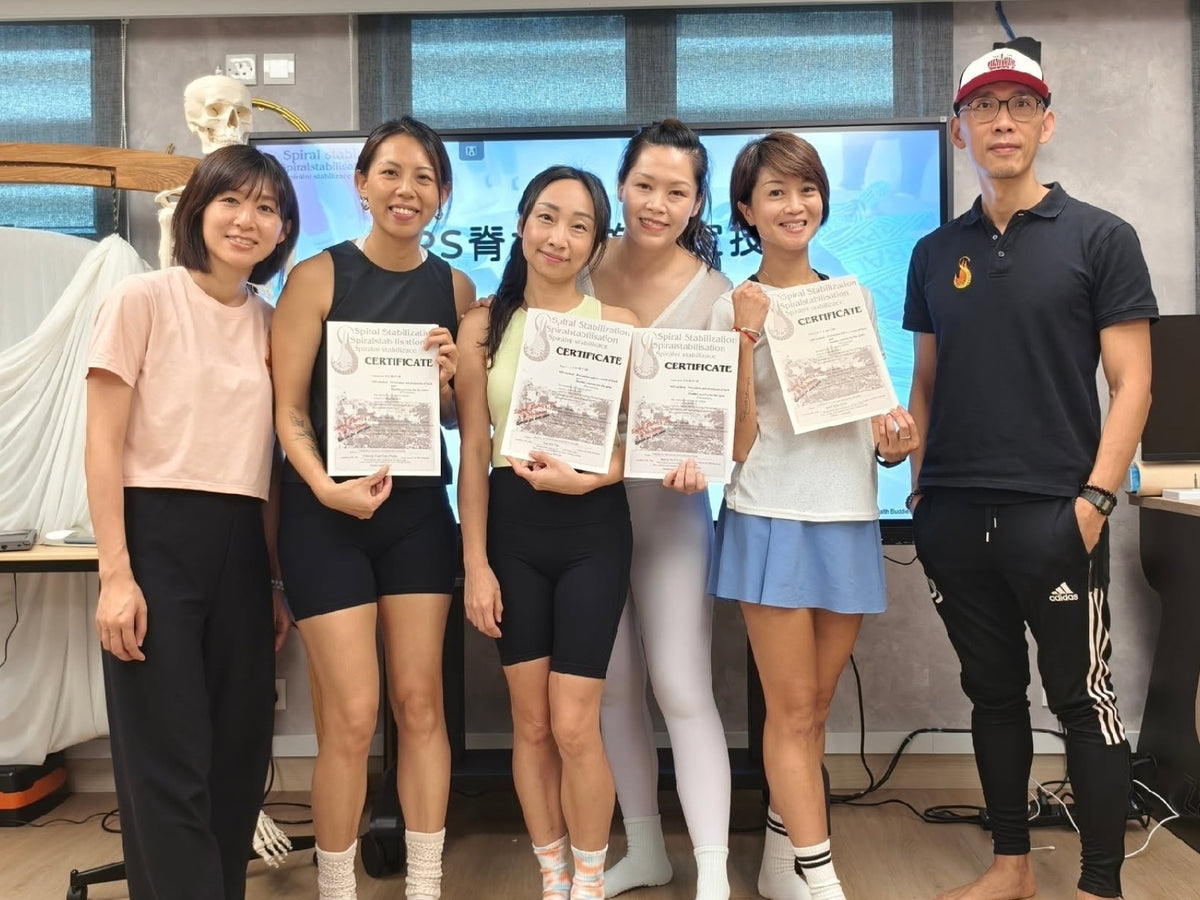
03 — International Certificate · Level 1Course content
The official certificate course of SPS headquarters in Czechiaoffered exclusively in Hong Kong by AWRTC
Four days, 24 hours in total, all sessions held in person in Hong Kong.
-
✓
Basic anatomy of the muscle chains and training principles
-
✓
Causes and prevention of spinal disorders
-
✓
Detailed instruction in exercise, correction and assistance techniques
-
✓
Relaxation techniques for the shoulder girdle and lumbar region
-
✓
Dynamic and static postural assessment
-
✓
Gait analysis and practice
-
✓
Individualised training strategies for different body types and populations
Course details
Four days, 24 hours · Taught in person in Hong Kong
Self-learners may enrol with no prior background
Who this course is for
-
✓
Therapists
-
✓
Rehabilitation professionals
-
✓
Sports coaches and instructors
-
✓
Self-learners training for their own use (no prior background required)
Where you can apply it afterwards
-
✓
Improving and preventing scoliosis and disc herniation
-
✓
Postural correction in children
-
✓
Recovery after spinal surgery
-
✓
Pregnancy training and postnatal rehabilitation
-
✓
Injury prevention, sports rehabilitation and performance
FAQ
The questions we are asked most about SPS
If your question is not answered below, please get in touch.
01What is Spiral Stabilization (SPS)?
Spiral stabilization exercise is a science-based method for stabilising the spine. It focuses on activating the body’s spiral muscle chains to generate an upward force that lengthens the spine, improving posture and enabling pain-free movement. Both the method and its outcomes are supported by clinical research and by established principles of biomechanics, muscle activation and rehabilitation science.
02How does spiral stabilization work?
SPS trains specific spiral chains — the latissimus dorsi and gluteus maximus among them — to form a dynamically stabilising internal support system around the trunk. This activation creates traction along the spine, helping to increase the space between vertebrae.
The exercises use spiral movement patterns that stretch and strengthen muscle simultaneously, improve coordination and stimulate adaptation between agonist and antagonist muscles. This corrects muscular imbalance, improves postural alignment and helps the body distribute load more evenly across the major joints.
03Is spiral stabilization scientifically supported?
Yes. SPS is regarded as a scientifically validated method in clinical use, built on formal research and extensive practical experience. Its effectiveness has been examined in randomised controlled trials, and peer-reviewed research has repeatedly shown that SPS can meaningfully reduce pain and improve physical function, with results comparable to other established treatment options.
The method was developed from 1979 onward by Czech physician Dr Richard Smíšek, a specialist in musculoskeletal and rehabilitation medicine, on the basis of clinical work with a large number of patients with spinal pain. SPS has been used in Germany for over twenty years and is covered by some insurance schemes, is widely practised in Czechia itself, and is increasingly available in the UK and Ireland through clinics and networks of certified practitioners.
04Does it work for children and adolescents?
SPS is suitable for children as well as adults and has shown clear results with conditions common in adolescence. In cases of adolescent idiopathic scoliosis (AIS), for example, SPS training has been shown to help a high proportion of patients avoid surgery.
05Which conditions can SPS help with?
Clinical research has demonstrated the effectiveness of SPS across a range of conditions. It is commonly used in the conservative management of spinal disorders and may help with:
- Herniated and bulging discs
- Scoliosis
- Chronic pain
- Spinal disorders generally (prevention and rehabilitation)
- Postural problems, including rounded shoulders, hunched back, rib flare and pelvic tilt
- Pelvic floor disorders
- Post-surgical recovery
- Postnatal rehabilitation